
How Stress, Cortisol, and Inflammation Influence Weight Gain
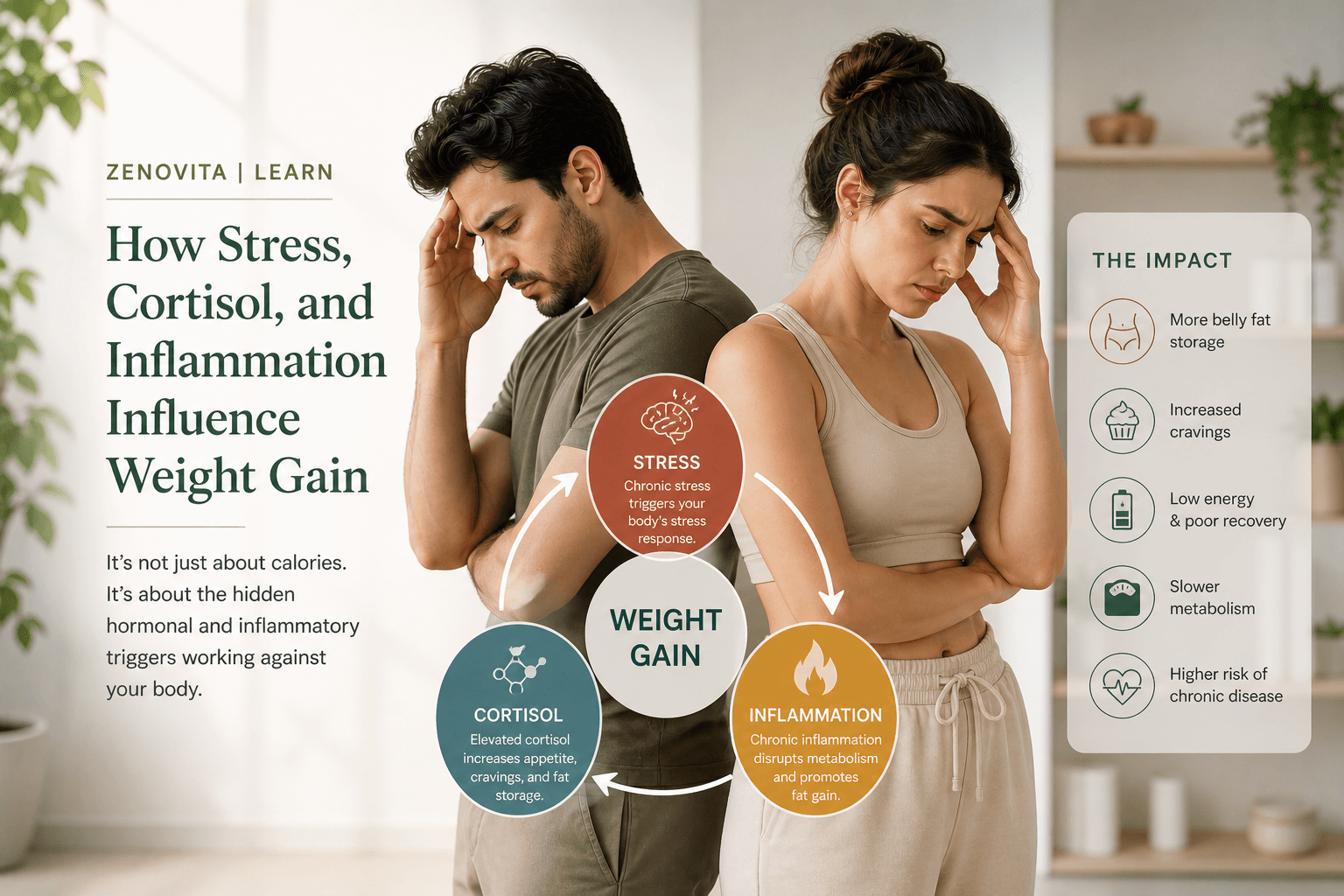
Weight gain isn’t always just about calories. In many cases, it’s influenced by chronic stress, elevated cortisol levels, and low-grade inflammation in the body.
Cortisol, your primary stress hormone, plays an important role in energy regulation. In short bursts, it helps you stay alert and responsive. But when stress becomes constant—tight deadlines, poor sleep, mental overload—cortisol remains elevated for longer than it should.
Over time, this affects how your body stores and uses energy.
Higher cortisol levels are associated with:
• Increased cravings, especially for sugar and refined foods
• Greater tendency to store fat, particularly around the abdominal area
• Disrupted sleep, which further impacts metabolism
At the same time, chronic stress can contribute to low-grade inflammation, a subtle but persistent state in the body that interferes with metabolic efficiency. This makes it harder for your body to regulate weight, even when your diet seems controlled.
This is why weight management isn’t just about eating less—it’s about supporting your body’s internal balance.
A more effective approach includes:
• Managing daily stress levels
• Prioritizing quality sleep
• Maintaining consistent nutrition patterns
• Supporting metabolic and inflammatory pathways
Certain nutrients and adaptogenic compounds are often used to support healthy cortisol response and inflammation balance, helping the body function more efficiently over time.
Sustainable weight balance begins when your body feels regulated—not restricted.
Better wellness decisions begin with better understanding.
Educational content only. This article does not diagnose, treat, cure or prevent any medical condition.
More in Scientific Wellness

Why You Feel “Wired But Tired” at Night
You’re exhausted by the end of the day, yet the moment you try to sleep, your mind stays active. This is a common sign of high cortisol patterns.
4 min read
Why Your Energy Drops Every Afternoon
The “afternoon energy crash” is often linked to blood sugar fluctuations, stress response, and inefficient energy production at the cellular level.
3 min read
Why You Feel Bloated Even When You Eat Healthy
You’re eating clean and staying mindful. And yet, your stomach often feels heavy or bloated. It’s often about how your body is processing it.
4 min read