
Why Your Energy Drops Every Afternoon

If you feel a consistent dip in energy between 2–5 PM, you’re not alone. The “afternoon energy crash” is often linked to blood sugar fluctuations, stress response, and inefficient energy production at the cellular level.
Your body relies on stable glucose levels to maintain focus and stamina. When meals are high in refined carbohydrates or spaced irregularly, blood sugar rises quickly and then drops—leading to fatigue, brain fog, and low motivation.
At the same time, stress hormones like cortisol influence how your body uses energy. When this balance is off, your system becomes less efficient, causing noticeable dips in performance during the day.
This isn’t just about feeling tired—it affects productivity, mood, and cognitive clarity.
To support consistent energy levels:
• Prioritize balanced meals with protein, fiber, and healthy fats
• Stay hydrated throughout the day
• Avoid over-reliance on caffeine, which can amplify crashes
Certain nutrients are known to support mitochondrial function (your cells’ energy systems), helping your body produce energy more steadily instead of relying on short bursts.
Sustainable energy doesn’t come from stimulation. It comes from stability. When your body is supported correctly, energy becomes something you maintain—not chase.
Better wellness decisions begin with better understanding.
Educational content only. This article does not diagnose, treat, cure or prevent any medical condition.
More in Scientific Wellness
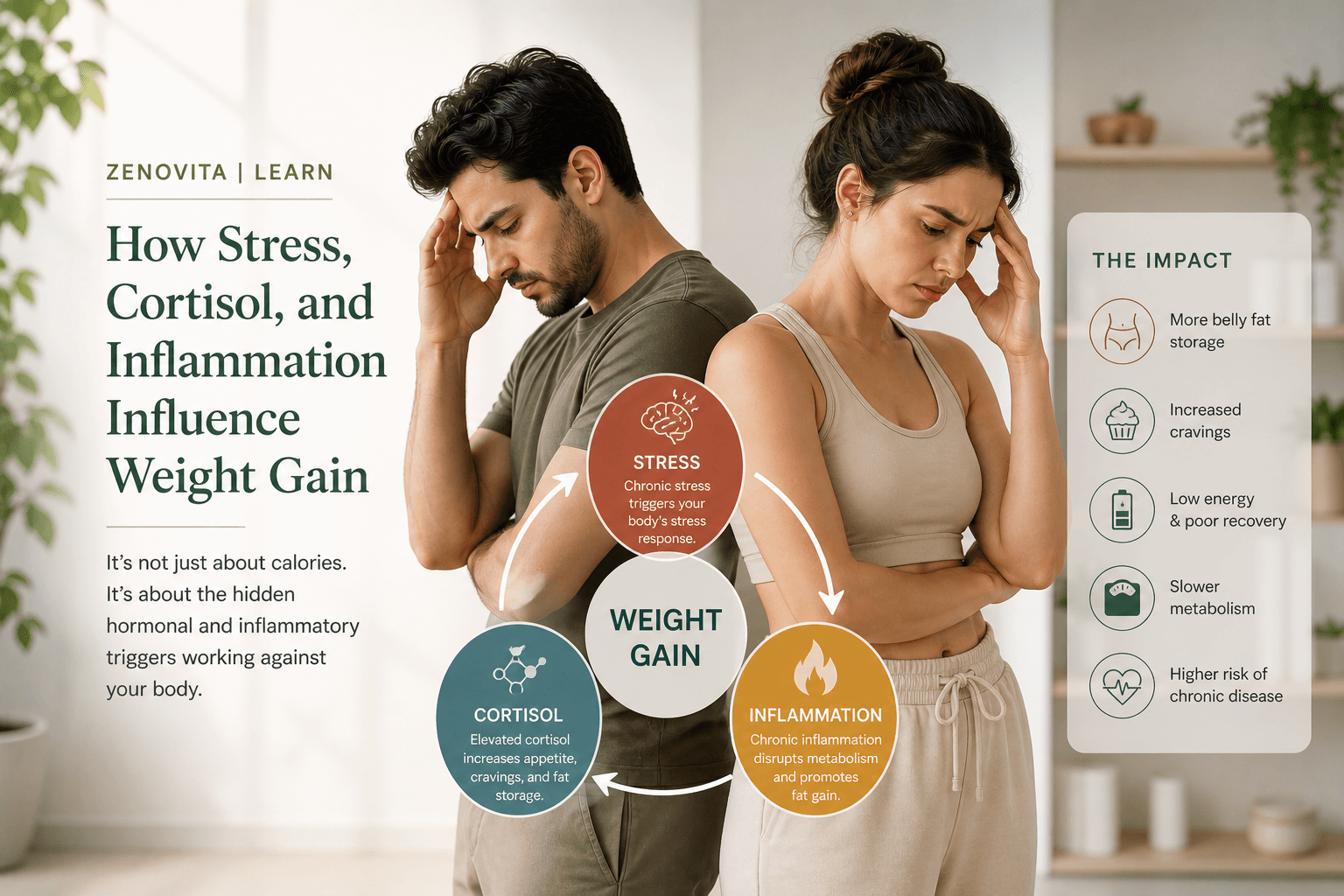
How Stress, Cortisol, and Inflammation Influence Weight Gain
Weight gain isn’t always just about calories. In many cases, it’s influenced by chronic stress, elevated cortisol levels, and low-grade inflammation.
4 min read
Why You Feel “Wired But Tired” at Night
You’re exhausted by the end of the day, yet the moment you try to sleep, your mind stays active. This is a common sign of high cortisol patterns.
4 min read
Why You Feel Bloated Even When You Eat Healthy
You’re eating clean and staying mindful. And yet, your stomach often feels heavy or bloated. It’s often about how your body is processing it.
4 min read